Winnipeg Zoning By-law Rewrite

Share Winnipeg Zoning By-law Rewrite on Facebook Share Winnipeg Zoning By-law Rewrite on Twitter Share Winnipeg Zoning By-law Rewrite on Linkedin Email Winnipeg Zoning By-law Rewrite link

Illustration of an urban cityscape


We’re updating Winnipeg’s zoning by-laws.

Zoning shapes our neighbourhoods—how buildings look, where shops and services go, and how streets and public spaces feel. It sets the rules for how land and buildings can be used and developed.

Winnipeg has two zoning by-laws—one for downtown and one for the rest of the city. They were last fully updated about 20 years ago.

We’re creating one new, modern zoning by-law for the whole city. It will be easier to use, support more housing options, and better match how Winnipeg is growing today.

We want to hear from you

Tell us what’s working well, what could be improved, and your ideas for the new zoning rules by June 5, 2026. Your input will help us draft the new zoning by-law.

Take the survey
Attend an event
Learn more


We’re updating Winnipeg’s zoning by-laws.

Zoning shapes our neighbourhoods—how buildings look, where shops and services go, and how streets and public spaces feel. It sets the rules for how land and buildings can be used and developed.

Winnipeg has two zoning by-laws—one for downtown and one for the rest of the city. They were last fully updated about 20 years ago.

We’re creating one new, modern zoning by-law for the whole city. It will be easier to use, support more housing options, and better match how Winnipeg is growing today.

We want to hear from you

Tell us what’s working well, what could be improved, and your ideas for the new zoning rules by June 5, 2026. Your input will help us draft the new zoning by-law.

Take the survey
Attend an event
Learn more


​Background

Winnipeg is growing and changing. We’re updating the zoning by-law to help guide how the city grows.

What is zoning?

Zoning sets the rules for how land and buildings can be used and built. It helps shape neighbourhoods by guiding things like:

  • What can be built (homes, shops, offices)
  • How land is used
  • Building size and height
  • Where buildings sit on a lot (setbacks)
  • How buildings fit with nearby streets and homes
  • Site layout (buildings, parking, driveways, open space)
  • Landscaping

Every property in Winnipeg has assigned zoning rules. Any new building or development must follow them.


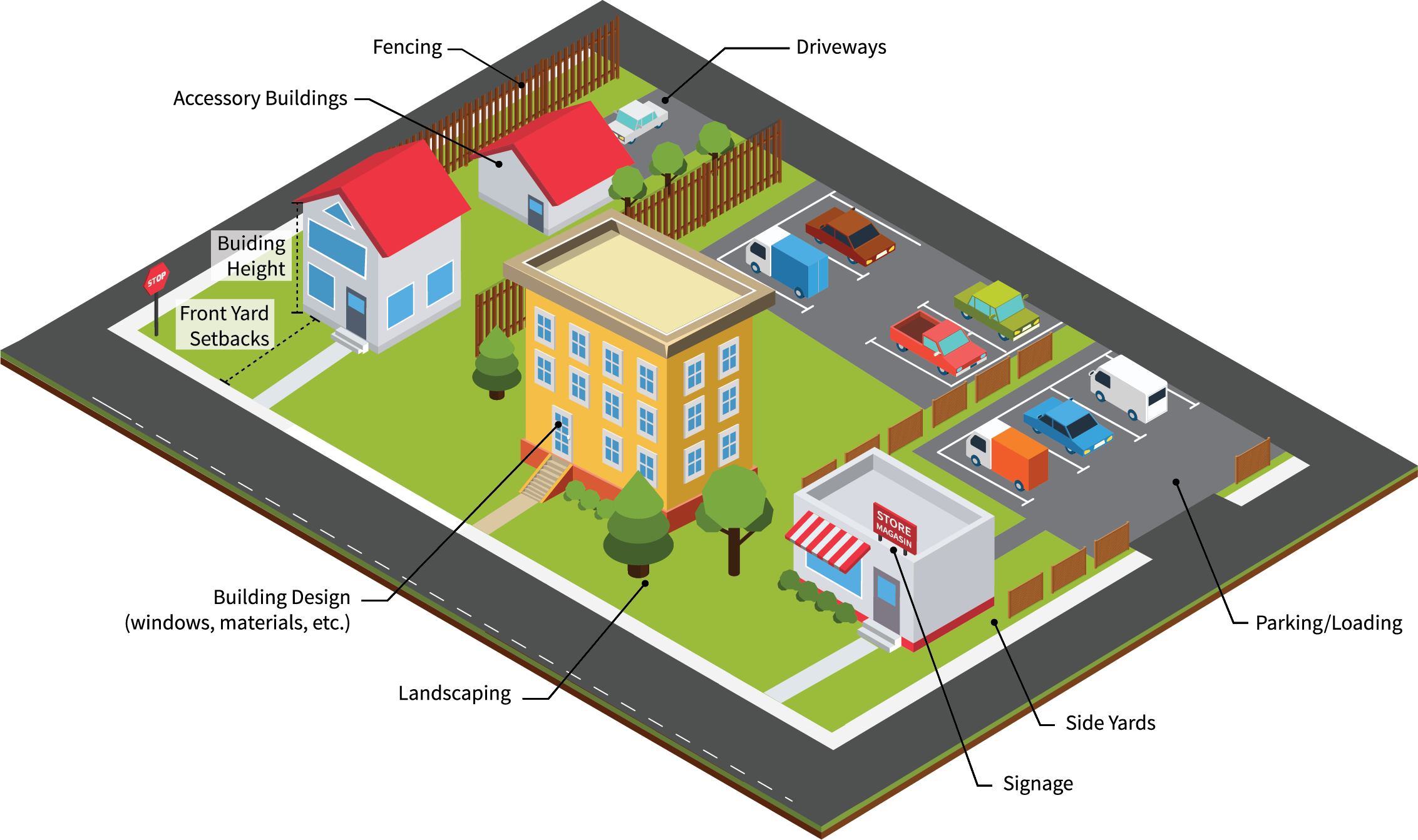
Illustration of a neighbourhood showing different building types, with labels for building height and front yard setbacks, along with streets, parking, and trees.

Why update the zoning by-law?

Right now, Winnipeg has two separate zoning by-laws—one for downtown and one for the rest of the city. These rules were last fully updated about 20 years ago.

Updating the zoning by-law will help:

  • Make the rules clearer and easier to understand
  • Support more housing options
  • Create rules that support walkable communities with a mix of services and amenities
  • Make development decisions more consistent and predictable
  • Align zoning with guiding policy documents: OurWinnipeg 2045 and Complete Communities Direction Strategy 2.0 (CCDS 2.0)

Shifting our zoning approach: Use-based and form-based zoning

Winnipeg’s current zoning by-law uses use-based zoning—what’s allowed on a property or building. With the new zoning by-law, we will incorporate both use-based and form-based zoning approaches:

Use-based zoning

  • Land is divided into zones based on what activities or uses are allowed on each parcel of land (for example, residential, commercial, industrial).
  • The type of use determines the rules for development such as:
    •  Allowable densities
    • Floor area ratio
    • Other dimensional standards (for example, building height)

Form-based zoning

  • Form-based zoning still includes zones.
  • There is greater emphasis on the physical form (the look and shape) of buildings and structure. It places less emphasis on the uses inside them or on the property.
  • This approach is used to achieve a specific urban form. It allows for a mix of uses as long as they adhere to the building standards established for buildings, streets, and public space. 

Using both approaches together helps make sure the rules fit the needs of different areas across the city.

Recent housing zoning changes

Some recent zoning changes that support new housing are already in effect, including:

  • Up to four units on a residential lot
  • Allowing taller four-unit homes near frequent transit routes
  • Allowing housing in more areas, like commercial corridors

These ideas will be carried forward as part of the new zoning by-law.  This project provides an opportunity to explore further improvements.

Stay Informed! Subscribe for project updates.
Page last updated: 05 May 2026, 10:35 AM