We’re planning rapid transit Downtown, together.
When buses mix with regular traffic, it can create a bottleneck at times. Removing buses from regular traffic will improve their speed and reliability.
In 2021, Council approved the Winnipeg Transit Master Plan (WTMP), including a plan for the future of rapid transit in Winnipeg. It includes three rapid transit lines that would meet in Downtown Winnipeg, with Union Station being the central hub.
Downtown rapid transit is the highest priority and will have the biggest impact on improving the transit system.
This project is just beginning and there’s still a lot more to do before we have rapid transit Downtown.
How we got here and where we are going
- 2021: Winipeg Transit Master Plan
Council approved the Winnipeg Transit Master Plan that gives us the next steps to expand rapid transit in Winnipeg.
- 2022: Design funding announced
Funding for the preliminary design of rapid transit in Downtown Winnipeg secured from all three levels of government through the Investing in Canada Infrastructure Program (ICIP).
- 2025: Prepare for Rapid Transit - Downtown
To get ready for the project, we hired experts in rapid transit design to ensure the design incorporates all the important aspects.
- 2026-2028: Design and public engagement
We are exploring what rapid transit in Downtown Winnipeg could look like.
We are starting by gathering early input from those who live, work, and own businesses in the project area. This will help us understand how they use the streets and any concerns they have before we look at design options.
We will also be looking for feedback from all Winnipeggers as the design progresses.
We will use this feedback, along with technical information, to design a system that works for the people who use it.
By summer 2028, we plan to have a preliminary design that will show what rapid transit in Downtown will look like, including station locations and other key details. We will also have cost estimate for construction.
- To be determined: Detailed design and construction
There is currently no funding set aside for construction. Once we have a preliminary design, we will apply for funding. Detailed design and construction would take years to complete.
Project area
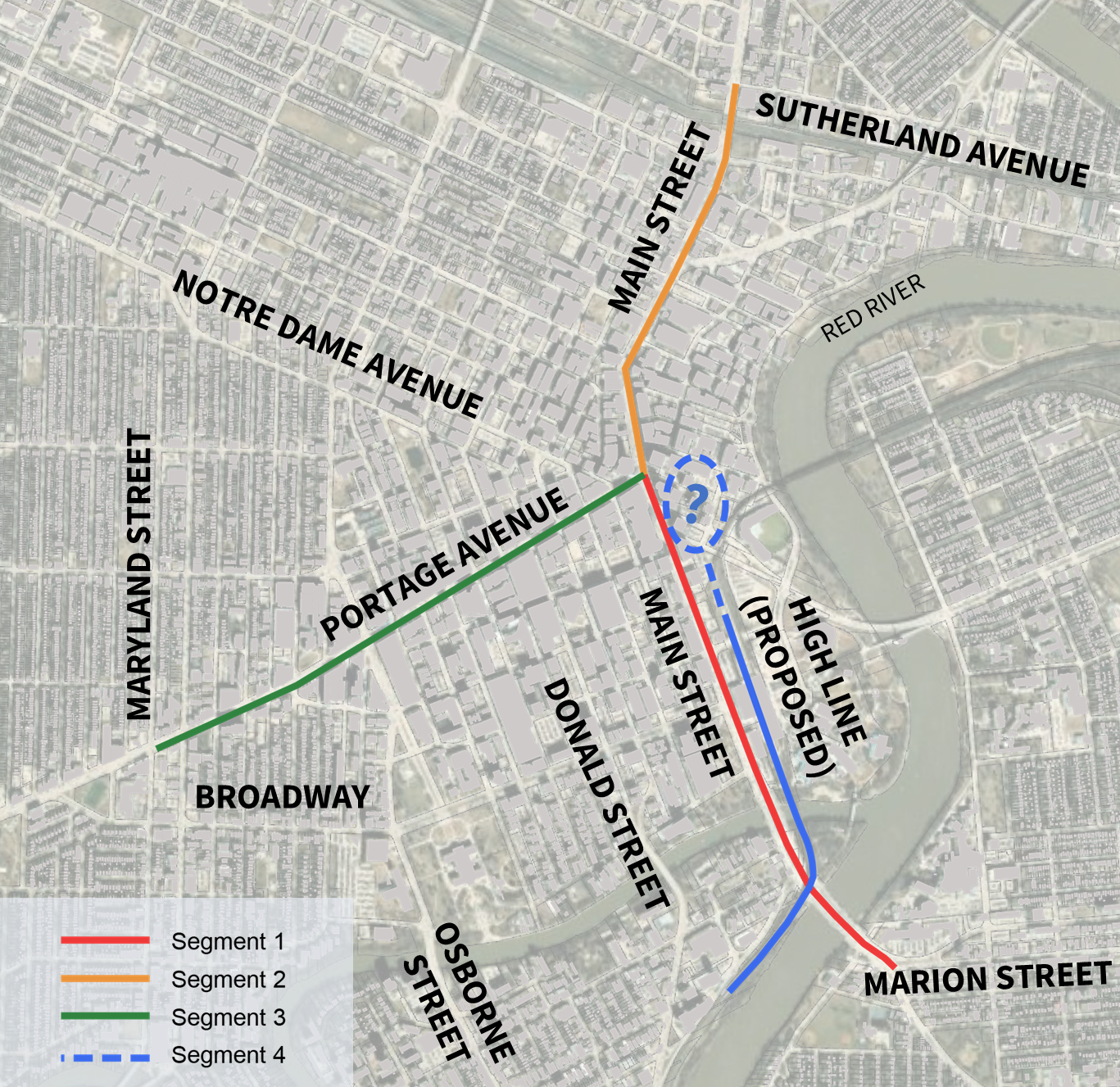
The Rapid Transit - Downtown project includes four segments:
- Dedicated on-street rapid transit on Main Street from Marion Street to Portage Avenue.
- Dedicated on-street rapid transit on Main Street from Portage Avenue to Sutherland Avenue.
- Dedicated on-street rapid transit on Portage Avenue from Maryland Street to Main Street.
- Elevated transit-only infrastructure between Harkness Station and Portage Avenue. This is also known as the “High Line.”
For the segments along Main Street and Portage Avenue, the dedicated lanes could be located:
- Curbside: Transit lanes located next to the sidewalk
- Centre: Transit lanes running down the middle of the road
- Same-side: Both directions of transit running together on one side of the street
Depending on the area, some sections of the project may use a combination of these designs.
We are also planning to:
- Design Union Station as a central transit hub
- Design stations along all segments
- Add active transportation connections
Our rapid transit strategy
We’re developing our rapid transit network in stages, from Downtown moving outward.
The Winnipeg Transit Master Plan includes six rapid transit corridors that will connect to form three main lines running across the city. See the map to understand how this network is planned to connect all of Winnipeg.
The Southwest Transitway is our first roadway dedicated for rapid transit. It is an 11-kilometre roadway that keeps the BLUE Line separate from other traffic. This allows buses to travel faster, stay on schedule, and move more people without adding more cars. It opened for service in April 2020.
- This is now Winnipeg Transit’s busiest route, with about 17,000 passengers using it every day to travel between Downtown and the University of Manitoba.
- We can also see its success in how the area is growing. New homes, shops, and services are being built along the route. This shows that people want to live and work near fast, reliable transit.
All of this tells us the first phase of rapid transit worked. That’s why expanding rapid transit is important. It will help support a growing city and keep Winnipeg moving efficiently in the future.
In 2017, we started the Eastern Corridor Study. This study is on hold until we know how this corridor will connect to Downtown. The Rapid Transit – Downtown project will give us that information.
At this time, we are focused on designing bus rapid transit infrastructure that can be converted to light rail transit in the future.
Read the FAQs to learn more.








Thank you for your contribution!
Help us reach out to more people in the community
Share this with family and friends