FAQs
- Curbside: The Transit lanes would be located next to the sidewalk
- Centre: The Transit lanes would run down the middle of the road
- Same-side: The Transit lanes would run in both directions on one side of the street
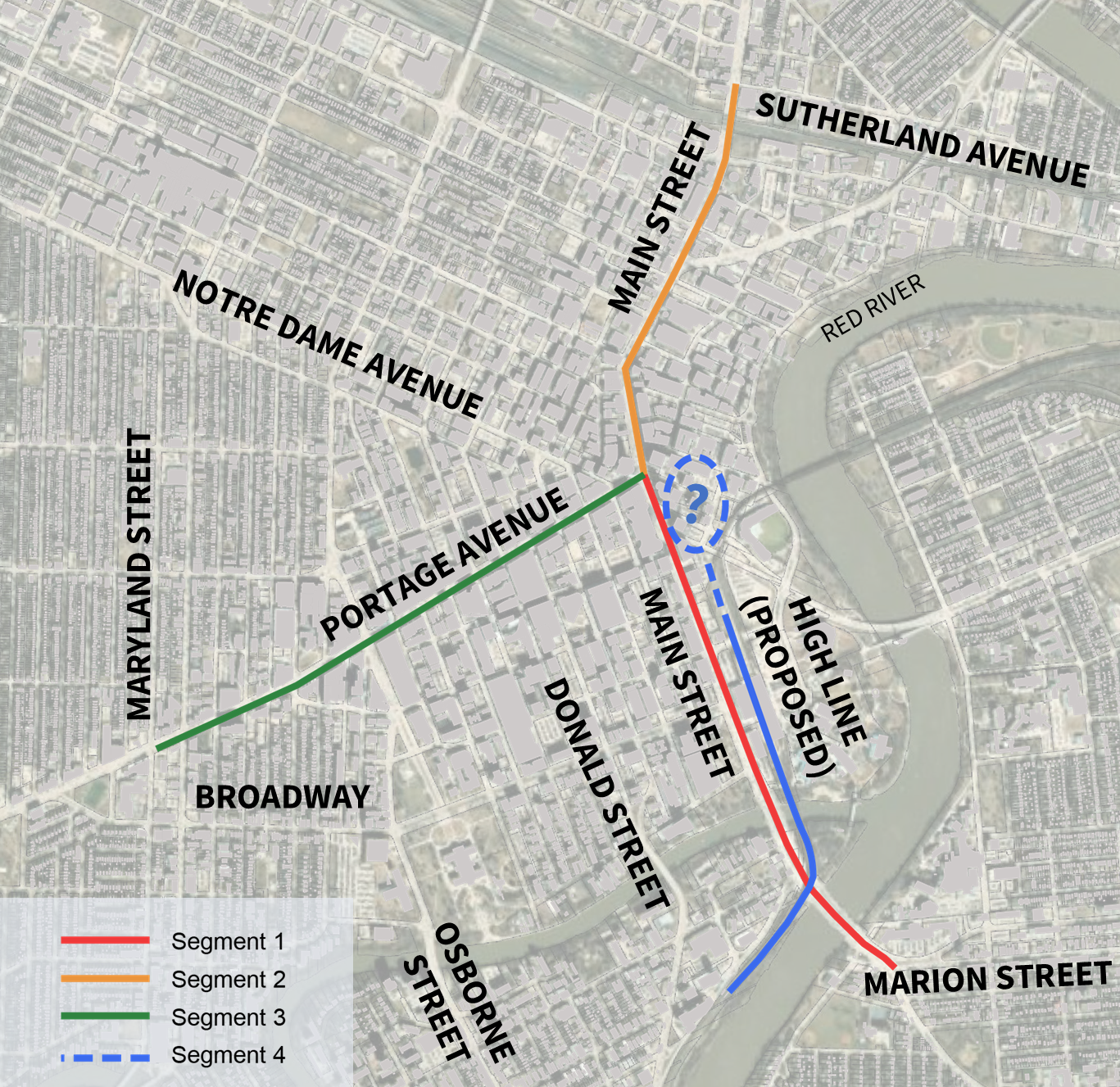
- Dedicated on-street rapid transit on Main Street from Marion Street to Portage Avenue
- Dedicated on-street rapid transit on Main Street from Portage Avenue to Sutherland Avenue
- Dedicated on-street rapid transit on Portage Avenue from Maryland Street to Main Street
- Elevated transit-only infrastructure from Harkness Station to Portage Avenue. This is also known as the "High Line”
- Design Union Station as a central transit hub
- Design stations along all segments
- Add active transportation connections
- Structural assessments of the structures
- Federal heritage approvals
- Close coordination with CN Rail and VIA Rail
What is rapid transit?
Rapid transit provides dedicated lanes for Transit vehicles. It can be located off-street or on-street. It is designed to provide the service people expect. Simple, reliable, and easy to use.
Off-street rapid transit is a dedicated roadway, like the Southwest Rapid Transitway.
On-street rapid transit is dedicated lanes that make sure buses don’t get held up with other traffic. While we don’t have on-street rapid transit in Winnipeg yet, it is used in other cities across Canada, like:
Aren’t diamond lanes on-street rapid transit?
Diamond lanes are lanes reserved for specific types of traffic. In Winnipeg, buses, bicycles, taxis, and Transit Plus vehicles can use them. They also allow regular traffic to use them for right-hand turns.
On-street rapid transit is dedicated for transit use only.
What types of on-street bus rapid transit are you considering?
Bus rapid transit can be designed in different ways depending on the street. The goal is always the same: help buses move quickly and reliably.
As part of this project, we are considering:
Why are you planning rapid transit in Downtown?
Today, many Transit routes travel through Downtown. Buses mix with other traffic, creating a bottleneck at times. This results in slower commutes for transit users and motorists, alike. Removing buses from regular traffic will improve their speed and reliability.
Rapid transit in Downtown will help ensure our system works the way people expect it to. Simple, reliable, and easy to use.
Won’t this create more traffic Downtown?
Our goal is to move more people through Downtown faster, not slow things down.
Today, buses get stuck in the same traffic as cars, which can create delays. Dedicating lanes to transit is trade-off. While this means fewer lanes for cars, a single transit lane can move far more people, since one bus can replace dozens of cars.
What kind of feedback are you looking for?
We are looking for early input from those who live, work, and own businesses in the project area. This will help us understand how they use the streets and any concerns they have before we look at design options. We will also be looking for feedback from the public as the design progresses.
This feedback will help us design a system that works for the people who use it. It will also help minimize the impact to those who live and work Downtown.
When will I be able to provide my feedback?
We will be asking for the public’s feedback in three rounds over the next two years. These rounds will coincide with key design milestones. This will ensure the feedback we receive can influence design recommendations.
Sign up for project updates to stay informed and involved.
Can I give feedback on where the routes should go?
The routes are already set in the Council-approved Winnipeg Transit Master Plan.
Where will the rapid transit corridors go, and what type of infrastructure are you planning?
The vision, so far, includes four Downtown rapid transit segments:
We are also planning to:
What will happen to the diamond lanes if new dedicated rapid transit lanes are built?
As part of our study, we will look at traffic and transit data to understand what is needed. This work will help us decide where diamond lanes should stay, change, or be replaced in the future.
Will you be considering light rail transit as part of this project?
We’re building bus rapid transit (BRT) now, with the option to convert to light rail (LRT) later.
BRT is significantly more affordable than other forms of rapid transit. This means we can make more improvements sooner. It is also more flexible, as buses can use the rapid transit corridors and continue onto regular streets – something LRT cannot do.
How much will this project cost?
The budget for the preliminary design is $7 million. It is funded by all three levels of government through the Investing in Canada Infrastructure Program (ICIP). There is currently no funding set aside for construction. Once we have a preliminary design, we will apply for funding to build the corridors.
How long will the project take?
We expect the design project to take approximately two years. There is currently no funding or timeline for construction.
What is the “High Line”?
The “High Line” is one segment of this project that includes an elevated transitway from Harkness Station to Portage Avenue.
It would run beside the CN rail corridor and pass through Union Station. Operating above street level and separated from general traffic makes transit more reliable. It allows large volumes of transit vehicles to pass through areas of congestion. All new bridges and retaining walls will be designed to accommodate future conversion from bus rapid transit to light rail transit.
What is the role of Union Station?
Union Station is protected under the federal Heritage Railway Stations Protection Act. It's designated as both a National Historic Site of Canada and a Heritage Railway Station. The project will look into using two of the tracks to bring rapid transit into the building.
Our planning process will include: